Beyond the Surface: Five-Dimensional Thinking in Painting and Decorating
Most people think of painting and decorating as a 2D job. Colouring in. Stay within the lines, get even coverage, make it look pretty.
We do that very well. But that's not where the work starts, and it's definitely not where it ends.
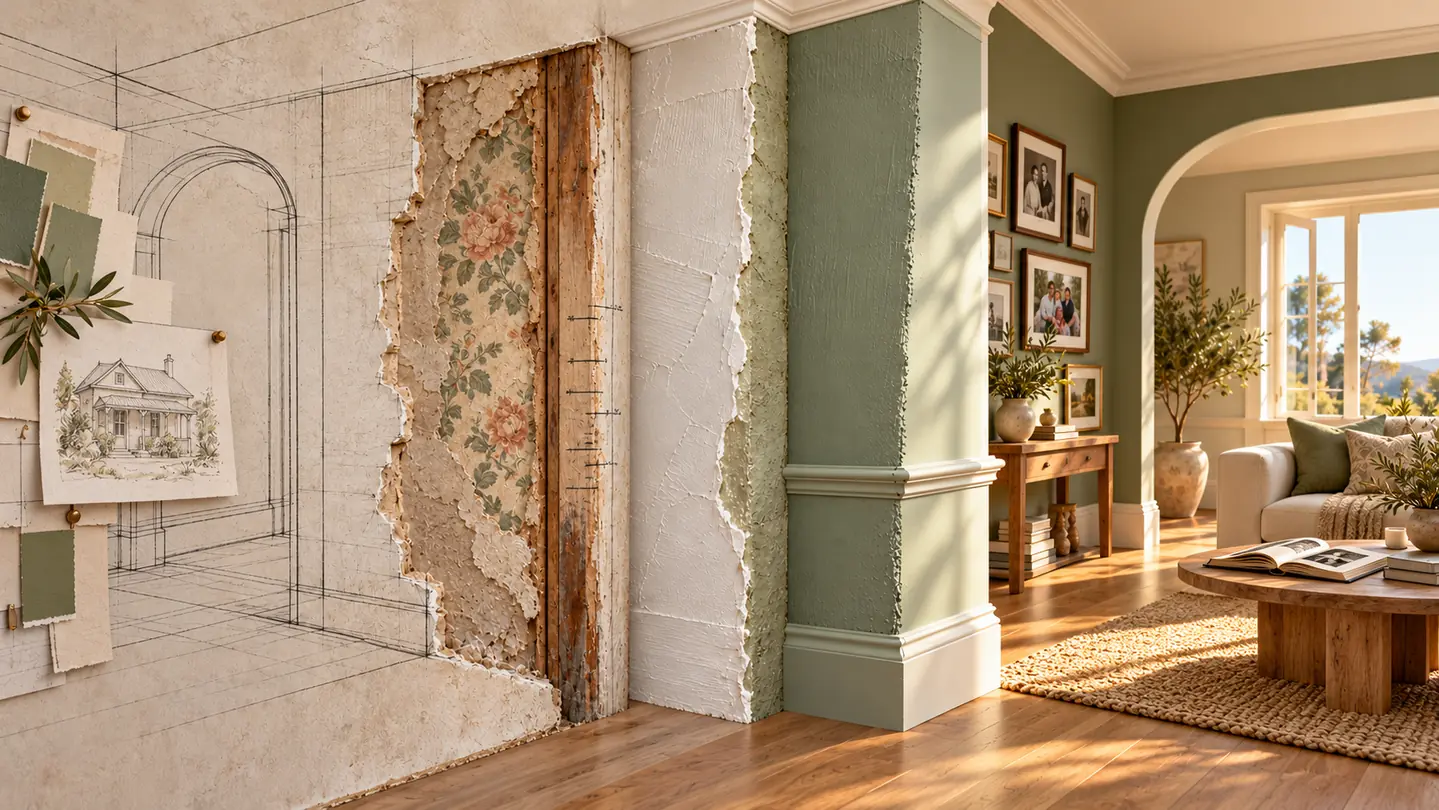
At Crafted Finishes, we think about every project in five dimensions. Each one is the same job, seen from a broader perspective: the intention behind it, the surface you see, the substance underneath, the years it will live through, and the story it becomes part of.
Anyone can colour in. We think in five dimensions.
1D: Intention
Before there's a surface, there's a line: energy with a heading. That's how we think about intention. Thought and energy come first. The action lands later, on the walls.
Every project starts long before anyone calls a painter. It starts with a thought like, "My house is looking a bit tired. I'd really love to give it some love."
No colours, no quote, no coats yet. But the project already exists.
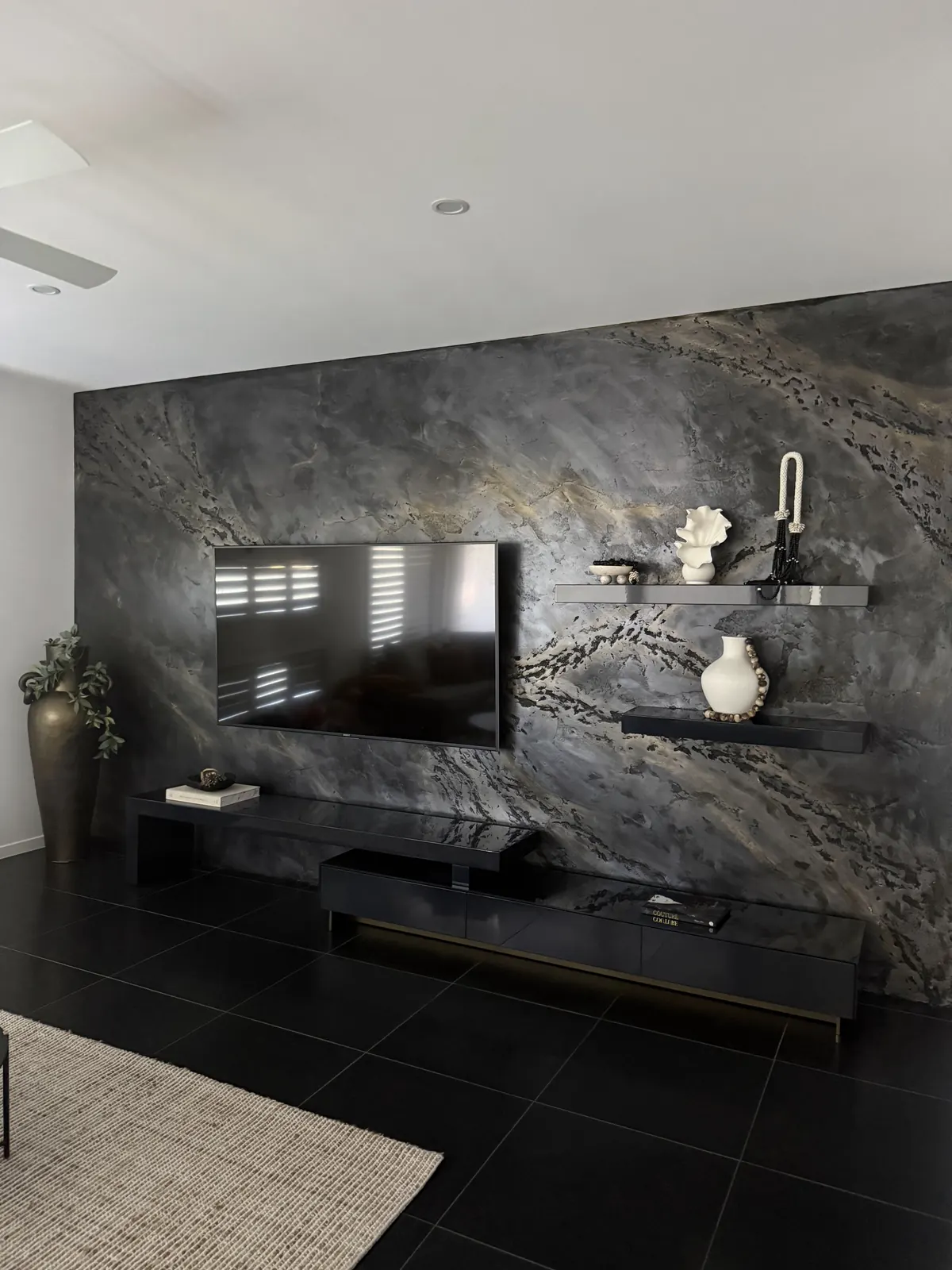
Often, intention starts as a feeling without a name. A client looks at their walls and something's off. The space feels a little bland, a little too polished, a little ungrounded. They can't ask for Marmorino if they've never seen it. Then they see what a Venetian plaster can do to a room, and the feeling becomes a clear intention: roughness, earthiness, groundedness, done in a polished and beautiful way.
Our knowledge doesn't replace their intention. It gives it a direction. When the feeling meets the right answer, it's a match, and chemistry is born.
Intention comes from three places. There are the client's needs and desires. There are our own: pride in the work, the craft we want to practise, the team we're growing. And there's the in-between: the shared intention neither side would find alone.
We find the direction, and it seems to find itself.
2D: Surface
This is the dimension everyone knows. Clean cut-ins, even coverage, consistent sheen, colour considered in the light it will actually live in. Neat sites, tidy work, cleaning up after ourselves.
We take pride in doing it well, and it's non-negotiable. It takes skill, care and a good eye. But the visible finish is only part of the job.
A beautiful surface matters. What supports it matters just as much.
Colouring in is the floor, not the ceiling.
3D: Substance
Add depth, and you start looking through the paint into the substrate: what it's made of, what's happening within it, and what's creating the problem you can see. Now you're thinking in systems: preparation, coats, film thicknesses, product compatibility and protection.
Take a rusty screw. Three painters, three approaches.
The first treats it in 2D. A stain blocker, a topcoat, and it looks like the rest of the wall. But the corrosion hasn't been addressed, so the first rain can carry the stain straight back through. The screw never stopped rusting.
The second says, "I'll two-pack epoxy the lot. Nice and thick." It covers the rust and may hold for a while. But without the right preparation and a proper sealer, corrosion continues underneath. Eventually, the coating loses adhesion and exposes a screw that was rusting the entire time.
From the outside, this looks like depth: serious product and a big specification. But nobody looked into the pits.
The third does. Rust has pits and pinholes, and as long as the metal can keep reaching oxygen, it keeps rusting. Where the fixing is suitable to retain, we mechanically treat it with wire wheels and sandpaper, then apply a penetrating epoxy sealer that goes deep and cuts the air out. Only then do we build the two-pack coat, all to the manufacturer's specification.
Now the thick coating is locking in something that's already been treated.
Thick paint isn't depth. Understanding is.
4D: Time
3D looks through the object. 4D looks into its future.
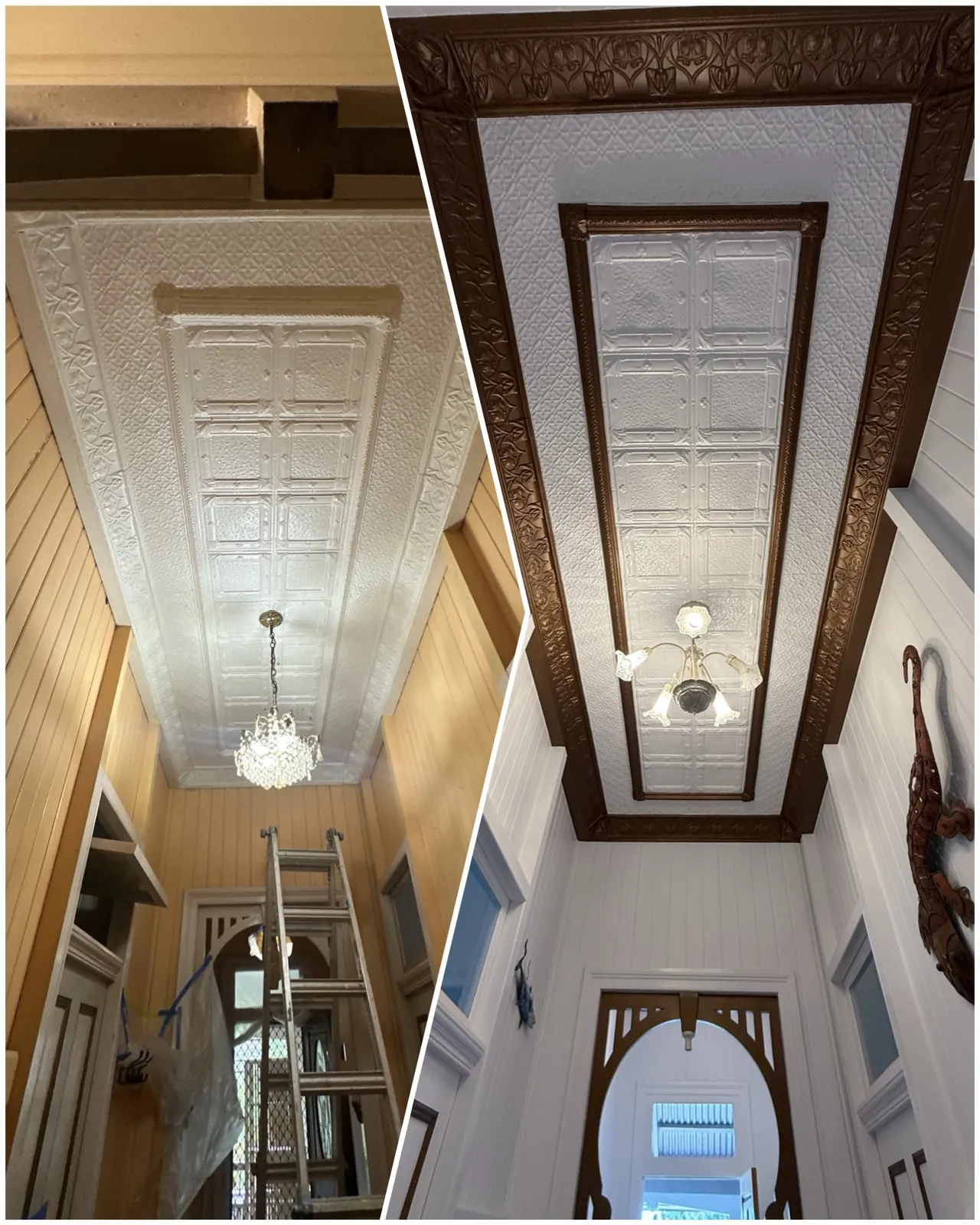
What will this surface live through? Foot traffic, weather, abrasion, knocks, touch-ups.
Take the north-facing side of a house in a rainy area. It cops strong sun, heavy weather, and repeated expansion and contraction. A neatly prepared and filled joint can look perfect on the day. A 4D thinker asks what that joint will be doing in a year.
How much movement will it need to accommodate? What will bond to those surfaces? What can be painted over? Depending on the application, that may mean choosing a modified polymer sealant with far more stretch and resistance than a standard acrylic gap filler.
A year later, the seal is still intact, and water isn't getting in behind the finish or into the substrate.
Sometimes 4D thinking is about honesty rather than toughness. A photo-studio cyclorama needs a dead-flat finish, but flat finishes mark easily. A protective clear coat may change its appearance or make touch-ups stand out. The right answer might be a suitable flat finish with a planned touch-up routine, built into a simple system and explained upfront.
And sometimes it's about what's outside the immediate job. If we notice that the shaded south side of your house is prone to mould, we'll talk about suitable cleaning and maintenance. That's part of looking after a home.
Tell the client about the future.
5D: Story
This is where we shine. It's where the work becomes personal.
A house, a shop, a business: it's someone's history, their future, their story. When we work on it, we become part of that story. We have an impact on it.
Through design and colour, we can help a place feel more like the people who belong there. Through restoration, we can preserve details that carry memories and meaning. The work becomes part of what they live with now, and what they pass on.
That's where legacy comes in. A finish has a lifespan, but the care invested in a place can reach further.
5D is also the emotional signature: how people feel about the story when they remember it. Did they feel listened to? Did they trust the people in their home? Did the result reflect what mattered to them?
That feeling shapes the story they tell.
Picture a job that drags on, with a crew the owners never quite trusted. Friends come over and say, "Oh, you got your house painted. Looks great."
The answer is, "Yes, it's a good job." And that's about it.
Now picture the same walls and the same paint, with a completely different experience behind them:
"I love them. They're amazing humans, a beautiful team, and the job they've done is just exquisite."
The finish is there in both cases. In the second, so are trust, connection and pride.
It's their story. We get to be part of it.
What the awards showed us
In 2025, we entered the Master Painters Awards for the first time. There were more than 230 entries, and the judge visited every one of them in person. We came home with eight awards: three category wins and five finalist placings.
Looking back, we can see these dimensions running through the work.
Entering was 1D: intention made real. I want to be the best I can be. What's the best way to do this? Is there a better way? Those questions run on repeat all day.
Our Artisan Finish win, for a glazed split-stone wall, was mastery on the 3D plane: depth, colour, glaze, opacity and texture. Our projects were assessed close to a year after completion by a NACE-qualified inspector, and they still looked good. That gave us confidence in the preparation and systems beneath the finish, as well as the finish itself.
Our Restoration win, for our Flaxton project, reflected 4D thinking. We chose systems built to outlast, including our own rust protection system.
And we were awarded the Judges' Choice for the feelings and impressions we leave with our customers. That's 5D.
A strong visible finish was essential across all of it. What these results reinforced for us was the value of thinking beyond the surface.
The loop
1D and 5D are the human dimensions. 2D, 3D and 4D are the craft in between.
And they connect. The shared intention we find at the start becomes the common story at the end. Then a client's story often sparks the next project.
It isn't a ladder you climb once. It's a cycle.
The shared intention at the start becomes the story at the end.
If your home is looking a bit tired and you'd love to give it some love, that's 1D. We'd love to hear about it.
Anyone can colour in. We think in five dimensions.